Mostrando entradas con la etiqueta Electronic. Mostrar todas las entradas

martes, 17 de abril de 2012

Eleh - Homage to the Pointed Waveforms


Genre: Drone, Electronic, Minimal

Buy 

Individually numbered edition of 500 copies on 200g virgin vinyl, packaged in custom 2-colour embossed letterpress jackets that just look amazing. Taiga Records bless the world with the first new Eleh material since their 2010 split side with Ellen Fullman. As the final release in a series dedicated to specific sound waves, it follows explorations of 'Square' and 'Sine' wave functions with three explorative compositions of triangle and sawtooth waves created on a dense modular system. They are the logical conclusion of live research performed in Barcelona, Brussels and Madrid during spring 2011. Side A contains a version of the piece that was conceived for the shows, which evolved during the three performances as it was continually reworked. It can be delineated into three distinct sections, each with more emphasis on (relatively) dynamic rhythm and noise than we're used to hearing from Eleh records. The B-side features two tracks mixed with "travel memories" and reflecting on that arrangement. The first is more reduced, yet prickly, and with sublime, almost melodic tone sequences to close. The third and final piece is a head-swallowing drone of near-cinematic potential, with a conclusion that's more than worth your patience. It should be noted that any perceptible distortion on the the 1st track of side B is "a problem of the audio itself, its structure and specific combination of frequencies", and can be taken as "a collaboration between Eleh and an unknown phenomenon". Don't sleep...

sábado, 14 de abril de 2012

En - Already Gone


Link removed by request

Genre: Ambient, Drone, Electronic


A universal definition of what is “beautiful” will probably remain eternally elusive. Different tastes, different cultures, backgrounds and a myriad of other factors play into how one person’s perception of beauty differs from the next. That said, it would be difficult to imagine anyone listening to the opening minutes of En’s sophomore effort, bask in the swelling layers of sound and not feel totally surrounded by the sublime, the utterly beautiful.

Processed fields of digital ambience wash down upon the listener, guided thoughtfully by the clear bass notes of The Drift’s Trevor Montgomery, notes appear and sounds reveal themselves from underneath the veils of opener “Lodi”, which at two minutes long is a fraction of what most ambient/experimental artists put out, yet equally effective. The presence of bass guitar remains in the following track, and the fact that its inclusion works so well makes one wonder, why aren’t more artists who dwell in the limitless fields of ambience using bass in their mix? Its effect is enamoring, like a constant link between the heavens and earth, making the pristine worlds created by the reverb laden soundscapes appear more tangible. They turn from places that exist solely in dreams and fantasies to ones where you can actually reside and immerse yourself within. The bass notes, however scarce they might be, add that effect perfectly. It is extremely simple yet absolutely brilliant. I want more bass in my ambient from now on!

The rest of the album doesn’t stray far from the opening tracks in terms of quality or mood. “Already Gone” keeps going strong and the duo of Maxwell August Croy and James Devane continuously show that there is more to drone or ambient music than tons of reverb. They are able to mix things up, but do so ever so subtly, the koto plucks which bring to mind Nest’s best work, the jagged drones laid down to utmost effect amidst other layers in a manner that would make Richard Skelton proud. It’s all so thoughtfully done and keeps the listener completely locked in throughout the album’s length.

Thoughtful instrumentation and an eye for all that’s pretty won’t cut it though, I mean sure it’s gorgeous, but there’s more than the fair share of ambient musicians out there treading along these same lines. What cuts it, what seals the deal, hits a home run, touches down and does a triple backward somersault, is an ear for melody. What has always differentiated the everyday sound artist from those who excel at it, in my humble opinion at least, is melody. This might sound old fashioned, but nothing warms my heart more, especially one that has all these beautifying elements in the background, and that is exactly what makes album closer, “Elysia”, work so wonderfully.

At a little over nineteen minutes, longer than the four previous tracks combined, “Elysia” is naturally the one track which ultimately makes or breaks the album. It is the moment where the listener is faced with a more concrete, longer lasting thought rather than snippets of emotion and it shows En’s abilities at their highest; Here we have an emotional mass that provides an alluring gravitational pull, the introduction of piano, followed by psychedelic arps and synths make way for a vast field of quietude ending with sparse toy piano notes that fall away quietly into nothingness. We’ve reached the end and get a bigger picture of the effort the artists have put into constructing the compositions, it’s a trip through the details rather than a postcard of the overall result. En take us through the express route in the first half of the album and then back via the scenic route and both work marvelously.

Whether or not “Already Gone” would remain in my personal rotation for many months to come is something that I can’t tell for sure at the moment, but what I am sure of is that for the time I spent with it, I loved it deeply and if I am to take a souvenir with me it would have to be second track “The Sea Saw Swell”. That Bass!!!

Review from Fluid Radio

martes, 6 de marzo de 2012

Julia Holter - Ekstasis


Genre: Experimental, Electronic, Psychedelic
Label: RVNG Intl


Like a lot of home-recorded music in the indie sphere in the last few years, Ekstasis makes heavy use of atmosphere. There's plenty of reverb and vocal tracks are braided together into drones; it's the kind of swirly production that's good for hiding mistakes. But nothing Holter does feels random. This album is above all careful, and its deliberate construction allows it to work on a different plane from most music that scans as "ethereal." Ekstasis is not the sort of oceanic wash you lose yourself in; instead, Holter's music has a way of snapping tiny moments and small sonic gestures into focus.Ekstasis is above all smart, and it makes no apologies for it.

Holter's work exists at the intersection between pop and "serious" music. The mayor of that particular corner is Laurie Anderson, and there are obvious parallels between the two. You can hear Anderson in Holter's flat, chant-like inflection, which allows her music and lyrics to do the emotional work. You can also hear it in her love of simplicity and approach to mixing traditional instrumentation and electronics. Another touchstone is the dark magic of Klaus Nomi. It's not just that the tracks like "Fur Felix" bear a similarity to Nomi tracks like "Keys of Life", there's also an undercurrent of ritualism and theatricality in Holter's music. Ekstasisis certainly mysterious, but not because meaning is hard to pin down; it's more that there are so many possible meanings, so many places to focus your attention.

Listening to Ekstasis, I keep thinking about how it differs from music that feels superficially similar. The music of Julianna Barwick, for example, has liturgical overtones, bringing to mind stone and glass and voices rising in cathedrals. Barwick wants to tap into something beyond words. But Holter's music sounds like it was assembled in a dusty library a floor or two below the sanctuary. It's a few shades darker, but it's also based on ideas first and intuition second. Despite using vocoders, drum machines, and electronics, it feels "old" in part because Holter so deliberately connects her music to the distant past. On her debut album, she did so by basing her songs on a play from ancient Greece by Euripides; here, she pulls words and scenarios from literature and mixes them with her own idiosyncratic approach to words. The songs include quotes from the likes of Virginia Woolf and Frank O'Hara. A line from O'Hara's poem "Having a Coke With You"-- "I look at you and I would rather look at you than all the portraits in the world"-- animates "Moni Mon Ami", nestled amid the twinkling synths, strings, and keyboards that sound like harpsichord are original lines like "Hours become years when you're gone!"

Where Holter's Tragedy felt more like a tapestry, with vocal tracks mixed in with instrumental bits and interludes, Ekstasis leans toward proper songs, and it palette is more uniform. "In the Same Room", despite its chintzy drum machine and mechanized hand-claps, is actually a drama unfolding in close quarters. "In this very room, we spent the day and looked over antiquities. Don't you remember?" to which the other character replies, "Do I know you? I can't recall this face but I want to." You see it play out on paper on the lyric sheet and it feels like a linear exchange, but Holter twists the voices together and the narrative folds in on itself. It's there as pure, gorgeous sound if you want it-- you don't need to know what the songs are about to immerse yourself in this record-- but the deeper you go, the more the songs open up.

"I can see you but my eyes are not allowed to cry..." is a lyric from "Goddess Eyes", a new version of a song that appeared on Tragedy. It's a line from the Euripides play that inspired her first album, and it's delivered in processed voice reminiscent of a vocoder. So we have a 2,000-year old phrase run through a device that makes a human sound like a 1970s version of the robots of the future. And at the center of all this time travel stands Julia Holter, pulling in references and sounds from everywhere and shaping them into a music that's both haunting and life-affirming, something to make you dream and think.

lunes, 5 de marzo de 2012

Loscil - City Hospital


Genre: Electronic, Ambient, Drone, Abstract
Label: Wist Rec


Sound report on Malcolm Lowry’s novella “Lunar Caustic”.

The “Book Report Series” was conceived as way of involving the shifting state of literature with a community that would not only help to highlight the significance of a book’s physical form but also allow one to glean new, immediate connections between differing art forms.

jueves, 23 de febrero de 2012

Orcas - Orcas


Link removed

Genre: Electronic, Experimental, Ambient Pop
Label: Morr Music


The courtship of ambient music and traditional songform has been a long and tenuous one, almost to the point that their differences seem irreconcilable. Spanning decades with only a few points of obscure intersections, the occasions on which the two styles have met and crossed into the pop culture lexicon have often yielded a contrary, oil-and-water form. The abstract nature of the "ambient" genre and instant gratification of the "pop" song require deft hands for successful cohabitation, thus it's little wonder that there are so few practitioners of its delicate equilibrium.

Orcas – comprised of haze-pop auteur Benoît Pioulard and post-minimalist composer Rafael Anton Irisarri – is an imaginative return to that narrative. Theirs is a style deeply rooted in personal variations on songform and ambient craft, and as a duo they bridge the furthest outlying aspects of their previous solo work published on Kranky, Touch, Miasmah, Room40, and Ghostly International. Here song and abstraction become one entity, condensing the spaces between to generate an arching trajectory. This co-mingling of contrasts is even coded into their moniker; Pioulard and Irisarri have chosen an iconic symbol of the American Pacific Northwest, a methodical sea hunter that is also a totem of the open oceans' expanse. The so-called "wolf of the seas" that evokes a quiet, stately, yet powerful nature.

Appropriately, their music is a careful balance of chiaroscuro elements, where pop hook and spatial ambience converge. In its environs, lyricism flows as a time-distended dynamic, rising and falling, proceeding almost antithetically to pop's typical gratification ethos.

Orcas has taken an immersive, fluid vector for their passions; a resonant call like sonar from the depths.

domingo, 22 de enero de 2012

From the Mouth of the Sun - Woven Tide


Link removed by request. 
Stream

Genre: Ambient, Drone, Electronic, Neo Classical


News came recently of Dag Rosenqvist's intention to release his last album as Jasper TX early this year, and move on, in his own words, to 'new beginnings'. His project From the Mouth of the Sun with friend and fellow noise experimenter Aaron Martin is the first of these, with another to follow with Matt Collings and hopefully more. Whilst Woven Tide, released by Jeremy Bible's Experimedia label, may show glimmers of both artists recognised sounds - the album endeavours to achieve something altogether different. The result is immediately compelling; full of moments of painful melancholy, disarming emotion and intense bittersweet beauty.

Difficult to ignore is the stark juxtaposition of reverberated sound, and striped back instrumentation, delivered by guitar, violin, interjections of voice/choir, chimes and more. As an entry point to the album and sound, the one minuter The Crossing introduces this aesthetic perfectly, setting out the intent for the rest of the tracks. From here on in we are treated to a set of stories retold with a romanticised tenderness, full of rich imagery, and textures.

Color Loss left me speechless on first listen and continues to affect on subsequent sittings. Working around a relatively simple melody, Martin and Rosenqvist manage an aching mournfulness through repeated choral voices. In the second half, the voices give way to allow violins to continue the motif, establishing an even greater heart breaking melancholia. The same depth of sound is found in the violin notes of modern classical figure-head Richard Skelton, who works every vibration emanating from his strings into gloriously rich sculptural textures. The duo develop this surrounding noise, without ever losing the stark emptiness.

Shimmering cymbals, and a metallic reverberation of dust particles appear to penetrate via osmosis on My Skin Drinks Light That Has Passed Through Leaves - a fine mist of coloured light slowly changing, broken only by gently plucked guitar. Pinned piano leads the dramatical swell of strings and effected noise on Sitting In A Roofless Room, perhaps the albums most visceral and discordant moment, before fading into the distance.

The long introduction of A Season in Water holds us in suspense, as if drifting through murky water, before echoing strings emerge from out of the depths. The surge of sonics that develop is powerful and exciting. Throbbing electronics, synth cascades, washes of violins in heavy reverb, and at its height, and ending, music box chimes. At the end of this epic journey the emergent Snow Burial (While Blue Skies Gather) evaporates all heavy weights and sheds light on dark corners, climbing to its end.

These are tales of loss, cathartic euphoria, and hope from out of pain and despair. Rendered with such masterful artistry that I predict many will fall in love with Woven Tide. Mastered by Taylor Deupree and cover artwork by the always brilliant Chris Koelle completes the package and makes this a must have release.
Review from Futuresequence

martes, 17 de enero de 2012

The Caretaker - Patience (After Sebald)


Genre: Ambient, Drone, Electronic


James Leyland Kirby returns with a long-in-the-making soundtrack to acclaimed filmmaker Grant Gee's documentary about German writer WG Sebald. 'Patience (After Sebald)' is a multi-layered film essay on landscape, art, history, life and loss - an exploration of the work and influence of German writer WG Sebald (1944-2001), told via a long walk through coastal East Anglia tracking his most famous book 'The Rings Of Saturn'. Much like The Caretaker's oeuvre, Sebald's works are particularly focused on themes of memory, both personal and collective, making Kirby the ideal candidate for this score. Grant tasked him with soundtracking responsibilities, but rather than thrift shop shellac, the source material for 'Patience' was sourced from Franz Schubert's 1927 piece 'Winterreise' and subjected to his perplexing processes, smudging and rubbing isolated fragments into a dust-caked haze of plangent keys, strangely resolved loops and de-pitched vocals which recede from view as eerily as they appear.

jueves, 22 de diciembre de 2011

Sean McCann - Sincere World


Genre: Ambient, Drone, Experimental, Electronic


Sincere World, which was due out almost a year ago as I understand it, has finally been released for the world to enjoy. Sean McCann has worn many various emotions and experiments on his sleeve through his musical output over the previous years. Some are wild and zany, some are more serious and solemn, some are exciting and vivacious, and others have many different nuances within the same album yet all with the same creative stroke of genius that makes McCann such a master. Sincere World is more of the serious and solemn persuasion. It’s borderline ambient, yet with the McCannian twist of personified drone. In the same vein as Fountains and Leave Today as far as subdued and quiet nature, but it has a living and stirring nature that isn’t quite as restful as those two others. This is a restless, tossing-and-turning, insomniac series of drones. They stir with a baggy-eyed longing for respite, counting sheep, tossing back a nightcap, whatever it takes to settle down and catch some Z’s. There is a calm and nocturnal nature to the ambiance, but I just don’t hear a settling down, a final stillness. To me, they kick the covers and lie staring at the ceiling in frustrated sleepless torture. Everything feels dark with only the slightest illumination that highlights the shadows on the wall. Not dark as in black or foreboding, just lightlessness. And all the anguished sleep deprivation is not anything felt by the hearer. I just call upon this descriptive metaphor because there is a stillness and gentleness that reminds you of the night, yet not all is at peace. There’s still life and movement that’s pregnant within these tracks. The best comparison would be the actions of one in bed who cannot seem to fall asleep. That said, the timbre of this album is fairly tranquil and great for midnight boredom or late night soul searching.

sábado, 3 de diciembre de 2011

Andrew Pekler - Sentimental Favourites


Genre: Experimental, Electronic, Drone
Label: Dekorder


Pekler has been operating within forms of ambient, experimental and electronica since the late-'90s. As a solo artist he has no less than five full-lengths to his name, released through labels like Stefan Betke's ~scape and Chicago imprint Kranky. In collaboration, he's worked as a member of Bergheim 34, who put-out a string of release on Klang Elektronik during the early-'00s, and Groupshow, the trio which also includes Hanno Leichtmann and Jan Jelinek. 

Sentimental Favourites brings together 14 tracks borne out of an interesting exploration. As is the case with much of Pekler's music, the album looks into "an abandoned genre or aesthetic trope," which in this case explores a "strain of late 60's/early 70's easy listening which melded the sophisticated songwriting pathos of Burt Bacharach, Jimmy Webb or The Carpenters with a post-psychedelic attention to sonic detail."

Max Richter - Perfect Sense OST


Genre: Neo Classical, Electronic, Ambient


Another stunning score from this english composer. Enjoy it.
There isn´t a buy link because there is no fisical release. If you want it you have to buy it on Itunes. Sorry.

viernes, 2 de diciembre de 2011

Hauschka - Youyoume Ep


Sorry but there´s no download till Serein has sold
the limited edition. Read their news and support them.

Genre: Neo Classical, Electronic
Label: Serein


The breadth of sounds that now make up Hauschka's palette are the result of years of experimentation with different piano preparations. Of particular note is his uncanny ability to conjure sounds from the piano most often associated with electronic instruments such as drum machines and samplers.

Anyone who's been following Volker's output of late will know that he's been creating some incredible compositions inspired by house and techno music. The first side of this new record is taken up entirely by one such composition.

'So Close' is a thirteen minute long piece of deep, earthy music. Perhaps never before has Hauschka's interest in electronic dance music been more plainly heard. The piece moves with a great sense of purpose; from scattered notes and the clatter of makeshift percussion there emerges a steady rhythm - a note in the lower register becomes a bass drum, its staccato bass pluck sounding four on four. Further up the register, sharps and flats become hi-hats and shakers.

The beat builds and breaks several times throughout the piece, vanishing altogether only to re-emerge with its syncopation subtly shifted. The final break-down of the last few minutes is the longest of all, a gentle piano refrain plays out the piece while the percussive elements sigh, rattle and whirr until their last breaths.

The two pieces on side 'B' of 'Youyoume' serve as a gentle reminder of just how versatile a producer Volker Bertelmann is. Gone are the unrelenting rhythms of side 'A' and in their place, thoughtful, cascading melodies which hark back to some of Hauschka's earliest output. 'So Far' is a solo piano piece for unprepared piano, while 'Paige and Jane', the final track, features prepared piano and cello.

In all, 'Youyoume' is a unique record in Hauschka's discography bringing together some of the styles and ideas which have come to define his unmistakable sound.

sábado, 26 de noviembre de 2011

Stephan Mathieu - To Describe George Washington Bridge


Genre: Ambient, Electronic, Drone
Label: Dekorder


Buy


Hear


“To Describe George Washington Bridge” is Stephan Mathieu’s second Dekorder release in the 10″ format (reflecting his interest in old 78rpm records) after 2009′s sold out “The Key to the Kingdom”, and, we’re happy to say, again it features two of the composer’s most outstanding short pieces. Both are recorded utilizing similar methods as used on his most recent album “A Static Place” on 12K Records yet they are presented in an even more condensed and melodic way. As source material he used transcriptions made from the marvelous 25x 12inch 78rpm set G.F. Händel. “Twelve Concerti Grossi” performed by the Busch Chamber Players in 1946, and a Columbia 10″ record from 1912 with Händel’s usual smash hits from “Messiah”.

“Between 1928 and 1932 the earliest recordings of historically informed performances of music from the late Gothic, Renaissance and Baroque era were etched into 78RPM records. I used some of these records from my collection, playing them back with two mechanical acoustic HMV Model 102 gramophones. The initial soundwaves produced back then by period instruments like the clavichord, viols, lute, hurdy-gurdy are read from the grooves by a cactus needle to be amplified by the gramophones diaphragm housed in a soundbox. Those vibrations travel through the tonearm which is connected straight to the gramophones horn, which releases the music to my space. Here the sound is again picked up by a pair of customized microphones and send to my computer, to be transformed by spectral analysis and convolution processes. An imaginary room, inhabited by all the spatial information collected on the journey is created and will be projected in a final instance into the listeners space.”

Stephan Mathieu is a self taught composer and performer of his own music, working in the fields of electroacoustics and abstract digitala. His sound is largely based on early instruments, environmental sound and obsolete media, which are recorded and transformed by means of experimental microphony, re-editing techniques and software processes involving spectral analysis and convolution; it has been compared to the landscape paintings of Caspar David Friedrich, the work of Colorfield artists Mark Rothko, Barnett Newman and Ellsworth Kelly.
Review from Fluid Radio


sábado, 19 de noviembre de 2011

Lee Noble - Horrorism


Genre: Experimental, Electronic, Ambient Pop

Buy 


Lee Noble blends droning lullabies into an artistic stew of eerie, yet inviting melody on his debut vinyl release, Horrorism. Deeply personal and wildly humbling, Horrorism is a vast chasm of introspective churning. Conjuring the spirit of some sort of homegrown and low-pass filtered Radiohead on downers, yet sewn to the hip of modern atmospheric-champions a la Grouper and Sean McCann. 
This is entirely its own creature, caressing various spots in the brain; both abysmal and blissful. Noble has crafted a 100% viable album, a true masterpiece in its own world. With Horrorism, Noble brings his compositions to life with class and depth, molding a beautiful, emotional release.


miércoles, 9 de noviembre de 2011

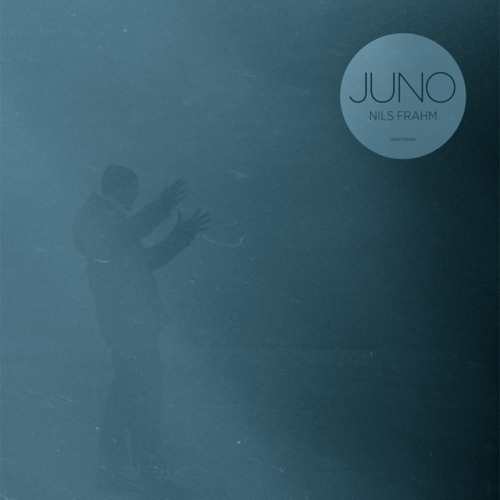
Nils Frahm — Juno 7"


Genre: Neo Classical, Instrumental, Electronic
Label: Erased Tapes


Hearing the first notes of For, the sound of Nils Frahm’s new composition comes strangely unexpected given his generally accepted image of a contemporary classical pianist. Along with his peers, Ólafur Arnalds, Dustin O’Halloran among others, Frahm prefers form above technical brilliance and swims in a flow of something what can be called post-minimalism. There are neither vivid and brave orchestrations in a vein of Arvo Pärt or John Cage, nor are Arnalds’ or O’Halloran’s arrangements as daring and provocative as John Adams’ or Henryk Górecki’s. Surely, the young generation doesn’t call the elders to a battle; they evolve a concept of simplicity and emotional clarity – something needed in nowadays overcrowded world.


That’s why For and Peter, two improvisational compositions from limited vinyl Juno , come bit unexpectedly. For consists exclusively of dark, organ-tinged analogue synthesizers imprisoned in never-ending harmonic loops and simple melodic loops. Frahm’s mind raises to a more hopeful, blue hills and descends back into sedated comfort of dusk. The reason why For deserves an attention is its liberation of all those clichés about synthetic music; Frahm preserves the composition from falling into cold, inhuman territories. I believe that he reaches this strange warmness either by the patience which is present in every harmonic modulation or in the calm evolution of the motive and in the very selection of the synthesizers which recall the embracing sound of pipe-organ. Finally, he has already demonstrated his affection towards electronics on 7fingers, his collaborative effort with cellist Anne Müller and Juno just follows the suite.


But this time, he’s alone with his synthesizers – no other instruments are put in the mix – and Peter Broderick as his recurring muse. After all, the mystery of the cozy nature of For may dwell in its devotion to a particular person and an underlying emotion: the classic source of beauty in music. You may perceive For (and the entire EP Juno) as a surprising experiment; but it’s rather an expression of a personal feeling through an automatized device controlled by human fingers and living, creative mind.
Review made by Tomas, from MusicAddicted


martes, 8 de noviembre de 2011

Leyland Kirby - Intrigue and Stuff Vol. 3


Genre: Experimental, Ambient, Electronic, Drone


This Time no reviews. I´m lazy, sorry


domingo, 6 de noviembre de 2011

Leyland Kirby - Intrigue & Stuff - Vol. 2


Genre: Ambient, Experimental, Drone, Electronic


Kirby provides yet another facet of beautiful noise exploration here. Comprised of three songs, two of which clock in at roughly 12 and 20 minutes, respectively, there is a more grandiose framework to this second volume. However, as always in Kirby’s work, it’s the little details in songs that define this artist.


Embarking at 'Eventually, It Eats Your Lungs' we navigate the crests of swelling choral samples and strangely tactile blasts of blurry bass, delivered with a physicality not unlike being touched in a dream. The two elements tussle and tumble in this fluctuating mindspace, reaching irregular resolutions that still leave us baffled - in the best possible sense. After dilating our sense of time with this passage, we're briefly extruded through the cosmic chrono-chaos of 'Speeded Up Slow Motion', a piece that feels like gazing into localized miniature black hole. That's all preparation for 'Complex Expedition', one of Leyland Kirby's most breathtaking masterpieces to date. Spanning all 20 minutes of the B-side, the milk sea is curdling and we're stranded, eons away from anyone or anything.

sábado, 10 de septiembre de 2011

Talvihorros - Descent Into Delta

Link removed by request

Genre: Electronic, Ambient, Drone
Label: Hibernate


The descent into delta is British composer Ben Chatwin’s map of the mind’s vibrational spectrum. The human brain emits waves at different phases, with gamma rays reflecting full alertness and delta waves reflecting the zenith of slumber. Much like a film can trace a character’s entire lifetime in a couple hours, Descent Into Delta maps the transition between complete lucidity and deep sleep in less than forty minutes.

While the title suggests a dropping down into peace or darkness, the guitar-driven ambience contains a lot of bright-cornered drama, suggesting that the mind is surprisingly active while on the path to losing consciousness. “Beta” sounds like our curiosity with dreams, as if it is a direct invitation to visit the other side. Washed out tremors of tremolo swim amongst disembodied conversations and sea-floor trowling guitars. A multitude of distorted and shimmering layers jockey for space like a crowded school of fish that instinctively knows when to turn. Listening to this track is as fascinating as watching a coral reef burst with chaos and balance: a vivid but relaxing experience.

Considering the significantly less busy layering in opening track “Gamma”, Chatwin’s explorations suggest that the dreamworld is more dynamic than the waking state. Further into Descent Into Delta the sounds spread out. Alpha waves, the official waves of wakeful relaxation with closed eyes, arrive in the form of lugubrious guitar respirations. Dulcimers waver like leaves in a tree, and sour the shine of day. With eyes closed, the tangible world starts to bend. Talvihorros attempts to float the listener’s mind on an earthen hammock while the atmospheric sounds occasionally go off key, as if the mind is remembering them incorrectly.

The release is meant to be a continuous exploration of waves emitted by the brain, but curiously the music stops halfway though before the cloud-painting “Theta” slumbers its way in. On an LP this makes sense, but it’s a shame Chatwin didn’t blend it all together for the digital release. This would have allowed the listener to fully indulge in the experiment. The Caretaker’s recent album also served as a mental experiment on vinyl, exploring the affects of Alzheimer’s disease and memory, but the nature of those song fragments warranted pauses and uncertainty. Descent Into Delta is very lush and was labored over intently. Addressing this snag would have improved the experience.

Chatwin seems to get better with each Talvihorros release, and Descent Into Delta is a fine example of the diverse ways in which a guitar can contribute to the crafting of a cohesive environment. Overall it has the sensibility of Aidan Baker and the real-time nocturnal features of Expo 70. Chatwin improvises much of his work and goes in to tweak it later. Yet despite the obvious amount of care, this release has the air of spontaneity. On the final track, “Delta”, a viola wanders like a ghost through the dead of night, clearly present, but without tangible form, like a lucid dreamer in the ether of sleep.

Review from The Silent Ballet

miércoles, 29 de junio de 2011

Nicholas Szczepanik - Not Knowing (For Eliane Radigue)


Label: Self released
Genre: Ambient, Electronic, Neo classical


Ante Algo Azul consists of 12 pieces; each will be released on a 3" CDr limited to 100 copies. The set will be sold as a subscription and each piece will be mailed individually, as it is finished. Each piece will be handwrapped in paper and, at times, a piece may also include other keepsakes like photographs, poetry, etc...

This is the first release of this serie

domingo, 6 de marzo de 2011

Emanuele Errante - Time Elapsing Handheld


Genre: Ambient, Electronic
Label: Karaoke Kalk


A new offering from Italian artist Emanuele Errante sees him continuing his characteristic approach to musical texture – the pairing of electronics and acoustic instruments to achieve a consolidated whole. As simple on the surface this is, often the discrepancy in timbre, or perhaps the clashing connotations the instruments conjure up can make for an awkward or irritating listening experience. Fortunately for Errante, his release history displays ause of this technique that has shaped a largely successful outing this time around.

Errante’s music, first introduced to me through Apegenine‘s Migrations (2007), and then Somnia‘s Humus (2008), stands to be in its own sub-category of minimal ambient and experimental modern classical compositions. Lo-fi noises, scratching on the strings of a gently weeping guitar, clicking field recordings, and cascading ambient atmospheres, penetrate through the walls and carpet, raising dust and killing mites (perhaps I should lower the volume a bit). Whether consumed as a sonic installation or an abstract piece of sound art, Time Elapsing Handheld captures the moment with its seven titles, creating a path which is “Leaving The Nowhere”through the “Memoirs”, a bit “Counterclockwise”, sometimes “Later, Earlier”, and always “Inner”.

Lush soundscapes loop and breathe through organic piano tones, guitar strums, and harp plucks, drowning in a generous sweep of synthetic strings, sampled noise, and dripping effects. Centered around the theme of passing time (as the album’s title suggests), the music hypnotizes the listener, bringing him a little closer into the notion of now, and then subsides, letting him simply float among the sounds of rewinding moments. Be still… and feel that… that’s right… 

The digital version of this release contains two more tracks, “Egostatsy” and“Hidden Sun”. Oh, and in case this review was not sufficient in piquing your interest, it is worth mentioning that Simon Scott appears on the album, collaborating with Errante on a track, “Made To Give”. Highly recommended for fans of Marsen Jules, Deaf Center, Rudi Arapahoe, and Rafael Anton Irisarri.

sábado, 5 de febrero de 2011

Gareth Davis And Machinefabriek - Grower


Not the original cover art

Genre: Ambient, Experimental, Electronic
Label: Sonic Pieces

MySpace

Web

Buy

So the story goes that Rutger Zuyderveldt and Gareth Davis met once for 15 seconds and out of that enough music for four albums was spawned. That’s an exaggerated version of events; nonetheless, by now this pairing is the stuff of myths. ‘Grower’ is the result of the same session that brought us last year’s ‘Drape’ release on Home Normal from this pair. Unsurprisingly, ‘Grower’ is surely to be as treasured by all that enjoyed the first round of music.

With ‘Grower’ what we get are two songs clocking in at over 15 minutes apiece. The thing that has made this duo a delight to hear is how well they feed off one another, especially considering the brevity of the sessions that led to this release. These are songs that take their time and are delicately nuanced but also surprising: the stillness is just an illusion as things are always transforming, elements drift in and out of focus, and what seem to be incidental moments actually become motifs within the pieces. Machinefabriek proves himself again and again to be a great collaborator always serving to counterpart the very best attributes of those he works with.

‘Grower Part 1’ begins with a long stretch of Rutger’s droning guitars setting the tone. But once that clarinet enters there is a whole new element added to the setting. When Davis enters there is a sense of foreboding and mystery that becomes clear, almost as if Davis gives the evocative aspects of Machinefabrieks’s works a sort of pinpoint accuracy. Gareth Davis does a lot with a little once again as he seems to be able to reference various world influences in three notes or less a la Demdike Stare. It’s quite unbelievable how many corners of the world this music is able to reference in its 33-minute span.

‘Grower part 2’ is the far more subdued piece at the outset. Davis comes in early on this one and Machinefabriek tends to take a more reserved position in the background. This time the relationship is reversed: it is Rutger who acts to give Davis’s work a sort of platform to build off of. But as it evolves, the piece turns noisier and darker than it’s predecessor. The final minutes seem like some nightmare of dissonance that might serve as part of the score to a Dario Argento film circa 2032.

The two songs that comprise ‘Grower’ are perfectly configured to create a narrative, just as the four compositions that made ‘Drape’ were. It seems odd to label improvised works as ‘perfectly configured’, but really this is a very focused release. Sure, such decisions are made after the fact, but still; we as listeners reap the rewards.

‘Grower’ is an album that often takes its time. These two artists hear each other and hear each other well, never missing a step, never getting ahead of one another. The only way these sorts of musical payoffs exist is when you have two musicians working with a sort of chemistry that is either organic or, well, not-at-all. Needless to say, these are two artists that balance/challenge/coerce the best from each other.