The goal of this site is share some of our favorite music with people, and help the artists to spread their work. If you like the music you downloaded here please support the artists and buy it. If you (artists or labels) don't think that this is an appropriate way to do it just ask it and I'll remove the links.
miércoles, 28 de marzo de 2012
Danny Norbury - Bluebeard
domingo, 26 de febrero de 2012
Ólafur Arnalds - Another Happy Day OST
domingo, 22 de enero de 2012
From the Mouth of the Sun - Woven Tide
Buy
miércoles, 4 de enero de 2012
Willamette - Echo Park
lunes, 5 de diciembre de 2011
Ólafur Arnalds - Living Room Songs
sábado, 3 de diciembre de 2011
Max Richter - Perfect Sense OST
There isn´t a buy link because there is no fisical release. If you want it you have to buy it on Itunes. Sorry.
viernes, 2 de diciembre de 2011
Hauschka - Youyoume Ep
the limited edition. Read their news and support them.
domingo, 27 de noviembre de 2011
Richard Knox & Frederic D. Oberland - The Rustle of the Stars
miércoles, 9 de noviembre de 2011
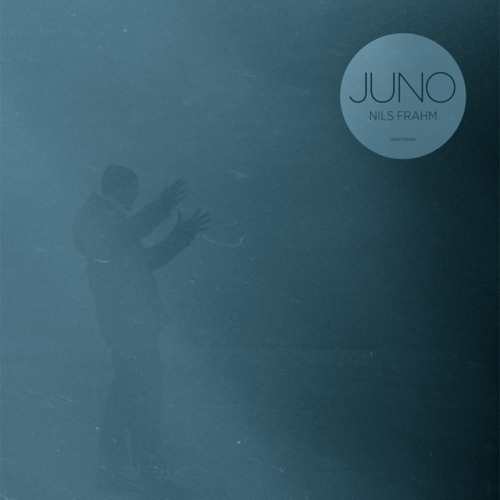
Nils Frahm — Juno 7"
Review made by Tomas, from MusicAddicted
miércoles, 29 de junio de 2011
Nicholas Szczepanik - Not Knowing (For Eliane Radigue)

jueves, 23 de junio de 2011
Marsen Jules Trio - Les Fleurs Variations

viernes, 22 de abril de 2011
Antonymes - The Licence To Interpret Dreams

There is no maelstrom, no swell of overwhelming sound. Antonyme’s first full-length work, The License to Interpret Dreams, is defiant in its fragility; in fact, the work is so over-wrought that it teeters on the point of collapse. It seems its purpose is to carry on a prolonged moment of respite despite the fact that it shudders under its weight and poignancy.
Each piece is a wonder, much like encountering different facets of the same being, finding something new to love about someone: an unintended twitch, a new wrinkle, freckle. To think you know something or someone so deeply and be surprised by what is still to be discovered. A guarded laugh may at times burst out into a full-fledged explosion. An undefined glance. I can also imagine knowing someone so deeply but encountering them in a store or street, without accompanying them, and seeing them exist outside of your life together, as if you’ve never met or known one another. Who is a person you care deeply about when they’re not with you? On this work, I began to look at people I’ve known and places I’ve visited in a new light, questioning everything I’ve ever known, and whether what I’ve known was conjured and an extension of myself. I listen to “Doubt” and I hear scattered words and experience an assortment of images, and I wonder whether what I see is me, or, as I understand myself to be.
A finite layer of gossamer shrouds the album from the start, as “A Fragile Acceptance” gradually seeps out of the speakers. A serene hush floats in and, intermittently, notes pick up out of the silence. A wave of strings emerges from the silence and shares a kinship with the sensation of an epiphany, of knowing everything all at once before it completely escapes you. I felt lonely in its absence, when it subsides, but became used to the emptiness so effortlessly filled in with the right note or the right shift, at the right time.
“Womb of the Great Mother” is barely there. I was directly connected to it without noticing; it was affecting what I was doing, whether I would stop and stare, entranced, while finishing some work, it began to inform my thinking and my doing. I suppose the purpose of some music is to barely exist and creep into your being. The many diluted definitions of ambient music try to express this point but what they fail to accept is that your mind moves with the music, you become aware, and it washes over you. Music should never exist at the perimeter and Antonymes’ work permeates your being from all angles. The listener plumbs the depths, occasionally rising for air on “Landscape Beyond an Open Window”; the wind cuddles around you before “Endlessly” wisps you away from the bracken, the charming foliage, and the shrubbery.
There is so much to experience and so much the music will conjure for the listener. The music on “The License to Interprete Dreams” can influence how one views the world, their inherent sensibilities, of knowing, and, finally, of returning.
Review from Fluid Radio
miércoles, 30 de marzo de 2011
Mark Templeton - Inland

The allure of Inland begins right away, as a twangy, reverb-ed electric guitar melody is bathed in cascading delays, creating a hypnotic pulse and textured sonic vistas. From there, this latest album by Canadian experimental artist Mark Templeton continues to document an insular yet inviting journey, the composer’s hands-on, collage-like methods producing enigmatic mood shifts and plenty of textural surprise.
Templeton’s approach seems obliquely rooted in both folk song and film soundtrack music: there’s often a wide -open -spaces, lonely camp-fire vibe to his layered acoustic and electric guitars, his casually plunked-out banjo melodies. But these humble beginnings lead to complex sonic manipulations: cavernous reverbs; pulsing echoes and regenerations; fuzz and distortion; broken-sounding electronics; severe jump-cut edits.
Within these transiting events, other sounds are sometimes heard: static and hiss, accordion chords, gongs and deep-toned drums. All of this seems to occur organically, within tracks that preserve the relatively short duration and, somehow, the familiar narrative-like arc of folk or pop song structure. And while each piece seems to create its own voiceprint, there’s also a seamless and mysteriously unified sense to to the way the record unfolds as a whole. This is decidedly not trance or drone music: moods and timbres shift and juxtapose quite quickly, sometimes cinematically.
Templeton’s wordless, often gently falsetto vocals appear suddenly in quite a few places, and the effect of this is powerfully intimate and anchoring. Within all that sonic ebb and flow, all those arching views, we come upon the sound of someone singing to himself; helping us to experience, perhaps, the strangely comforting sense of sharing in another’s engagingly hermetic creative world.
Review from Dusted Magazine
viernes, 11 de marzo de 2011
Federico Durand - El Extasis de Las Flores Pequeñas

After the superb La Siesta Del Ciprés released last year on Spekk, Buenos Aires-based Federico Durand returns with El éxtasis de las flores pequeñas, a 35-minutes subdued and beautiful evocation of time spent as a child with his grandparents to the woods in the Argentinean South. Using a reduced and evocative sound palette made of piano and acoustic guitar, augmented with field recordings collected in the gardens of Buenos Aires, Durand conjures memories of his lost grandparents’ home, in a delicate and poetic study of nostalgia and childhood.
As the rain pours outside, the gently reverberating piano notes of opener El pequeño huésped sigue dormidoslowly unfurl and are soon accompanied by a quiet acoustic guitar, suggesting a lonely day spent at home, flicking through a worn out photo-album of sepia-tinged pictures. Nothing mournful or sad, just vignettes of long-gone moments, resurfacing and transporting the listener to their own childhood. Subsequent numbers are somehow more oneirical – the melodic motifs being quite distant, suggesting fragments of memories that fold into each other, as in a super-8 film of past holidays. At other times like in Elin for example, the same piano phrase keeps looping, its meaning becoming all the clearer as the piece progresses, as if one could see at last why this particular memory had stuck for so long in our head, giving a sudden new insight into our own story.
Durand has taken great care when recording his instruments, conjuring a necessary distance that perfectly matches his intentions. The piano in La Casa De Los Abuelos is presented through a sonic veil that achingly underlines the nostalgic mood of the piece. In the title track, the guitar is processed through echo and delay-pedals in such a way it suggests faded-out memories, as seen in a shadowbox. Sounds of hands gliding between chord shapes on the guitar’s neck are isolated and amplified, and seems to remove themselves from the interwoven melodies.
Each track tells its story ever so slowly, like a poem being read out loud, progressing at its own unhurried pace. InAtardecer en las montañas, piano and guitar congeal into a droning mass of majestic beauty that drift ecstatically on the surface of a sunlit pond. The delicate touches of xylophone-like instruments add a very interesting contrast to the track that clearly stands out as the most blissful piece on the album. In the closing Kim, Durand’s reverberated guitar comes back in a simple and very evocative chord progression that loops atop processed field recording and gently saturated undulating drones, as a way of letting go of those long-gone memories of childhood, grateful that such moments ever existed.
El éxtasis de las flores pequeñas is a work of extreme sensibility that avoids unnecessary sentimentality or cliched evocations – Federico Durand unveiling its narrative through delicate strokes of unassuming beauty.
Review from Fluid-Radio.
martes, 8 de marzo de 2011
Julia Kent - Green And Gray

The solo work of cellist Julia Kent deals in different ways with concepts of borders and of spaces which are neither one thing nor the other. Her first solo record, Delay, was based on that most modern (and Eno-esque) of limbos, the airport. Having crossed the globe in a number of different ensembles, most famously as a member of Antony and the Johnsons, but also with a range of more leftfield acts such as Rasputina, Burnt Sugar, Angels Of Light and Stars Of The Lid, she found she was spending rather a lot of time trapped in those places, and elected to use them to her advantage. She made recordings in airports, and used them as the foundation for Delay, naming the resulting tracks after the airports in which they were recorded. The title of her second album for Important suggests she has found the way out, but only to another place betwixt and between: the place where the grey of the city meets the green of the countryside. And exactly how much of an escape that turns out to be is open to question.
Green And Grey opens and closes with cicadas, stridulating in the evening air, with Kent’s looped cello building upon the samples to create the compositions. In between, there are tracks named after trees (“Ailanthus”), water (“Acquario”), landscape features (“Overlook”) and constellations (“Pleiades”), but also in one case, a building (“Spire”). It seems at first listen that Kent is outside, recording the sounds of the natural world, in order to inspire her work. The natural rhythms of those insects, the gurgle of water, the patter of raindrops, all find a musical echo in the tracks which follow them. So in a number of ways, the modus operandi hasn’t changed from Delay, it is just the location (or rather the locations) which is different. What is most telling here, however, is just how unobtrusive the recordings are. They are but brief snatches of very quiet sounds, the merest hints of the ambience of the outside world.
Leaving aside Eno (whether she draws from him intentionally or not), you have an album which takes similar cues as the likes of Johann Johannsson and Max Richter, or perhaps Hildur Gudnadottir with her more diaphonous cello work Without Sinking: modern, melancholic, minimalist, classical. However, in a sense trying to pigeonhole her records goes against their very essence: they seem to be born of a desire to break out, to escape. The short, churning rhythmic loops which underpin so many of these pieces act like an anchor, these ostinati counteracting the melody line’s desire to take the piece into different landscapes.
The more you listen, the more it begins to feel like, despite first impressions, this is less a record about the physical border between the city and the country, and more one about a mental border. The sound of echoing footsteps in “Ailanthus” suggest we haven’t even left the building, while the water heard in “Acquario” may even be the sound of a fishtank, rather than a stream. The cicadas are just as likely to be heard through an open window; let’s face it, you aren’t going to be plugging in a looping pedal in the park. As the surge of those song-like melodies is once more halted in its tracks, you feel that on Green And Grey Kent is as trapped in the city as she ever was in the airport. With the urge to escape to nature being defeated time and time again by more mundane concerns, sometimes all a city dweller can do is dream of leaving.
Review taken from The Liminal.
domingo, 27 de febrero de 2011
Dustin O'Halloran - Lumiere

martes, 17 de agosto de 2010
Rafael Anton Irisarri - The North Bend
Label: Room40
My Space
Buy
miércoles, 26 de mayo de 2010
Peter Broderick - Three Film Score Intakes
Genre: Neo Classical, Piano
Label: Schedios
My Space
Buy
martes, 25 de mayo de 2010
Ous Mal - Nuojuva Halava
Link removed by request
Genre: Ambient, Experimental, Neo Classical
Label: Preservation
My Space
Buy
Ous Mal is the recording project for 22-year old Olli Aarni. With previous CD-R releases for both Finland’s 267-Lattajjaa and the UK’s Under The Spire, Ous Mal has already gained fine notice for his expansive sound, further developed in widescreen ways on Nuojuva Halava, his first full-length.
Finding common ground between the dusty tenor of old-school hip hop cassettes and the fog of deep ambience as a base, the music of Ous Mal also takes on an ingrained influence of traditional Finnish folk for an epic, otherworldly take on sound and song. These atmospheric pieces can slowly swell into ecstasy or settle into hazy shades and spring into moments of joyful pop abandon. That line back to tradition – with some pieces using the age-old Finnish stringed-instrument, kantele and others drawing from old Finnish hymnal albums - makes for a lyrical imagery that evokes an elusive sense of place. It’s a sound with the lingering presence of the past but with one eye set firmly on taking it into the future. Roughly translated, ‘nuojuva halava’ means ‘swaying bay willow’. The way things in nature change through time and surroundings is a recurring inspiration for Olli’s music, heard especially in the way he often takes his textures towards compelling points of decay.
viernes, 16 de abril de 2010
Rafael Anton Irisarri - Reverie
Label: Inmune Recordings
My Space
Buy
Reverie pairs two brand new compositions with an interpretation of Arvo Pärt's classic 'Für Alina', arriving in an edition of 500 copies pressed onto clear virgin vinyl, complete with download code. The A-side begins with 'Lit A Dawn', a typically dense and immersive composition that integrates pensive, tentatively paced piano figures with arcs of vaporous background ambience. The compressed and muffled quality of the recording only heightens the impact of the music itself: as slow and purposeful as it may be, it somehow also feels as if its on the verge of rupturing or breaking at the seams. After this lyrical opening, 'Embraced' takes on a more mysterious quality, sliding what seems to be submerged guitar figures across Eastern-style scales while a soupy, filtered production style lends an aloof, washed-out feeling. Taking up the entirety of the B-side, the extended 'Für Alina' is rendered with a reverent beauty, observing the meditative economy of Pärt's triadic 'tintinnabulation' style. Here the bell-like sonorities prompted by sustaining overtones is as important to the central harmonies themselves, and Irisarri certainly exhibits an understanding of this kind of detailed approach to minimalism. The piece is supremely graceful, dictated by a free flowing tempo and a mood of poised introspection. It fits Irisarri's own style of composition and performance perfectly, and he makes for an apt interpreter.